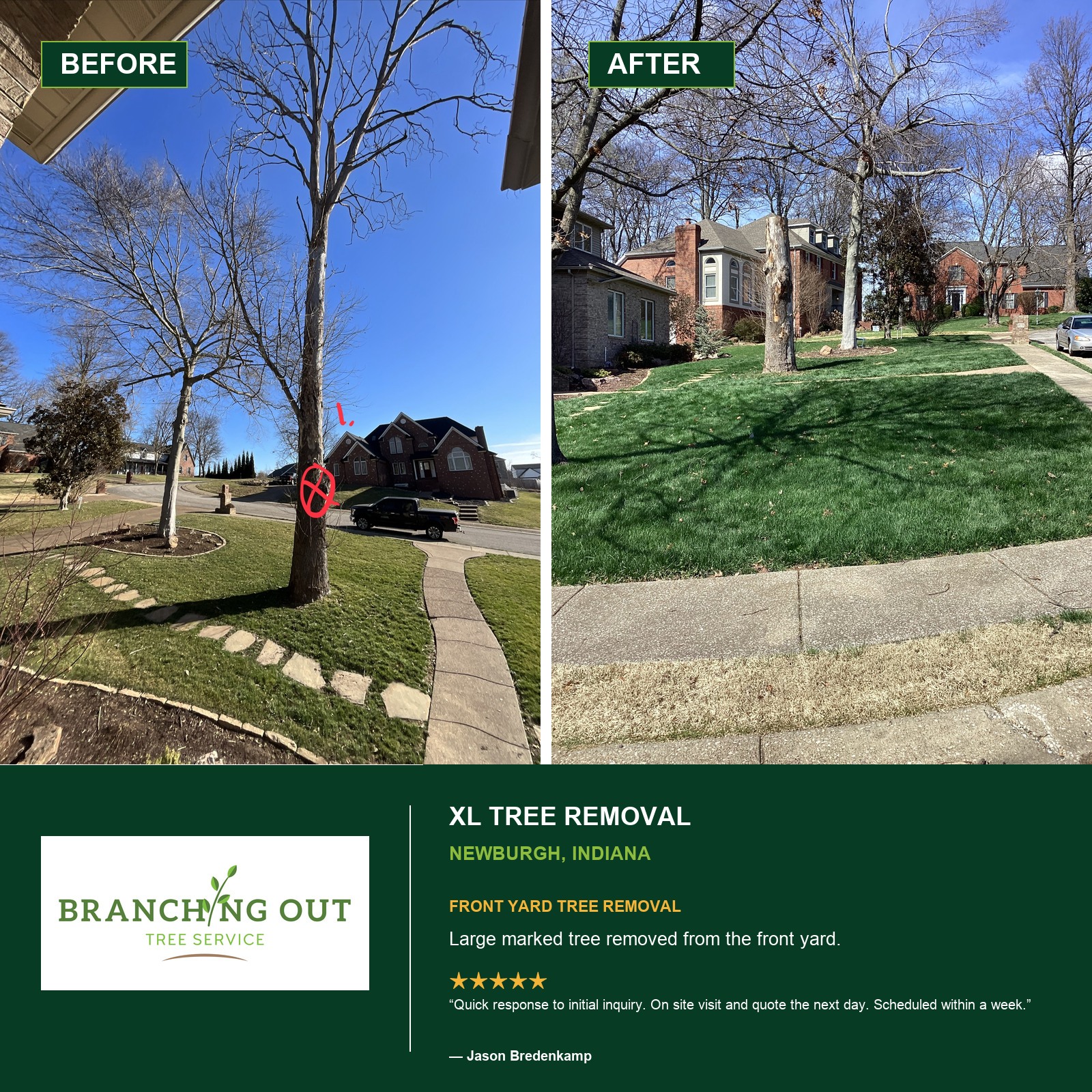
Removing a tree is a serious decision when it is dead, leaning, storm-damaged, structurally compromised, or growing near a home, driveway, fence, or utility line.
When removal may be the safest option
Trees may need removal when they are declining, split, uprooted, hollow, interfering with construction, or creating a clear safety or liability concern. We look at the tree and the entire work area before recommending the next step.
What your quote considers
Tree size, condition, access, rigging or bucket needs, nearby property, debris handling, and whether stump grinding is included all affect the work. We do not publish generic price ranges because every site is different.
Removal, cleanup, and the next step
Our scope can include controlled removal, debris cleanup, and a separate stump-grinding option. If you are unsure whether a tree needs to come down, request a quote and we will explain the practical choices.
A faster, clearer quote
Help us understand the tree and property
A few practical details can reduce back-and-forth before the site review. Photos are helpful, not required.
Share the property and concern
Include the property address, what you are seeing, and what you want the area to be like when the work is complete.
Add useful ground-level photos
If it is safe, show the whole tree, the trunk or base, visible damage, and nearby structures from the ground.
Show access and scope
Include the driveway, gate, fence, or equipment route and tell us whether cleanup or stump grinding should be considered.
Do not climb, enter a hazard area, or approach utility lines to take a photo. Photos support the initial review; they do not replace an on-site assessment.