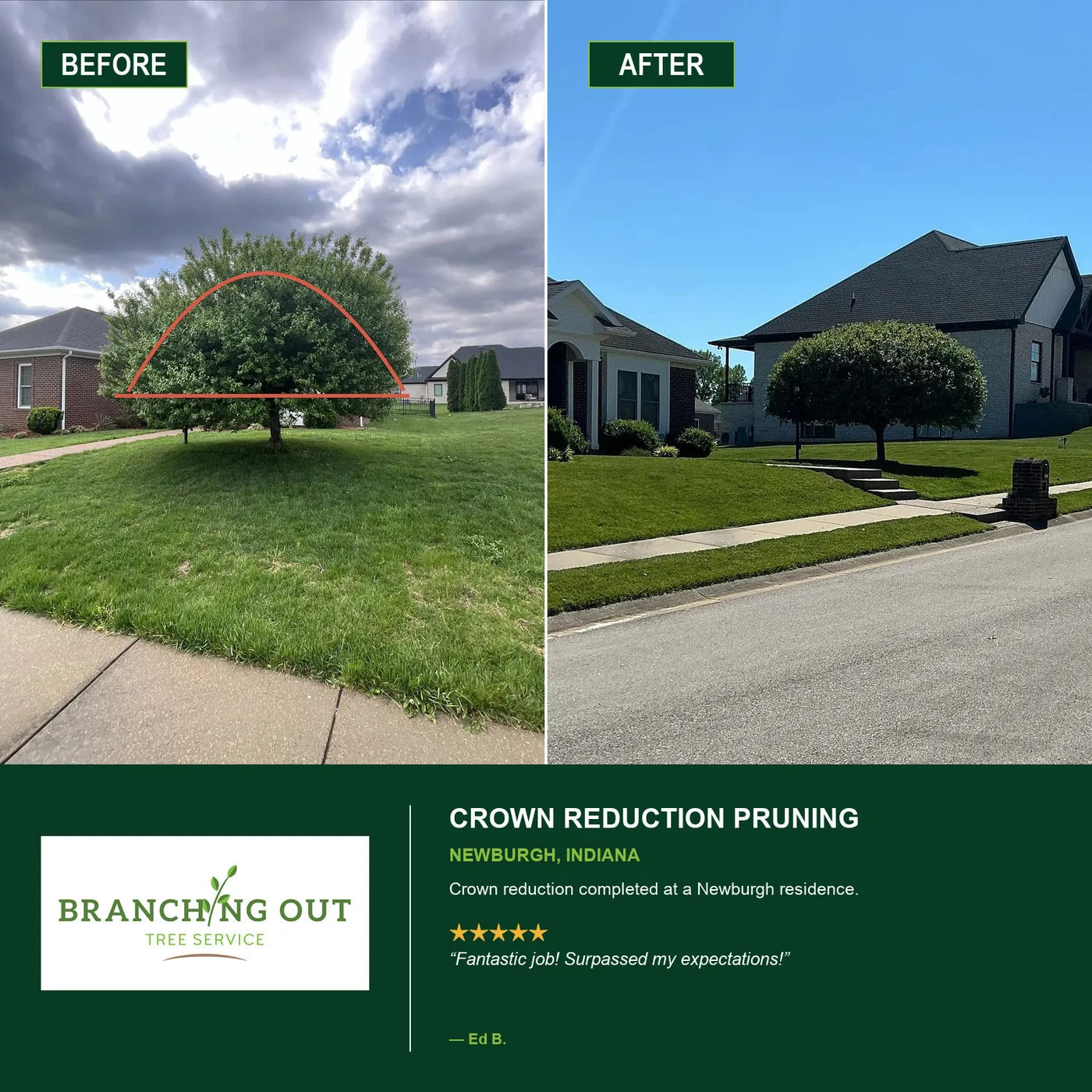
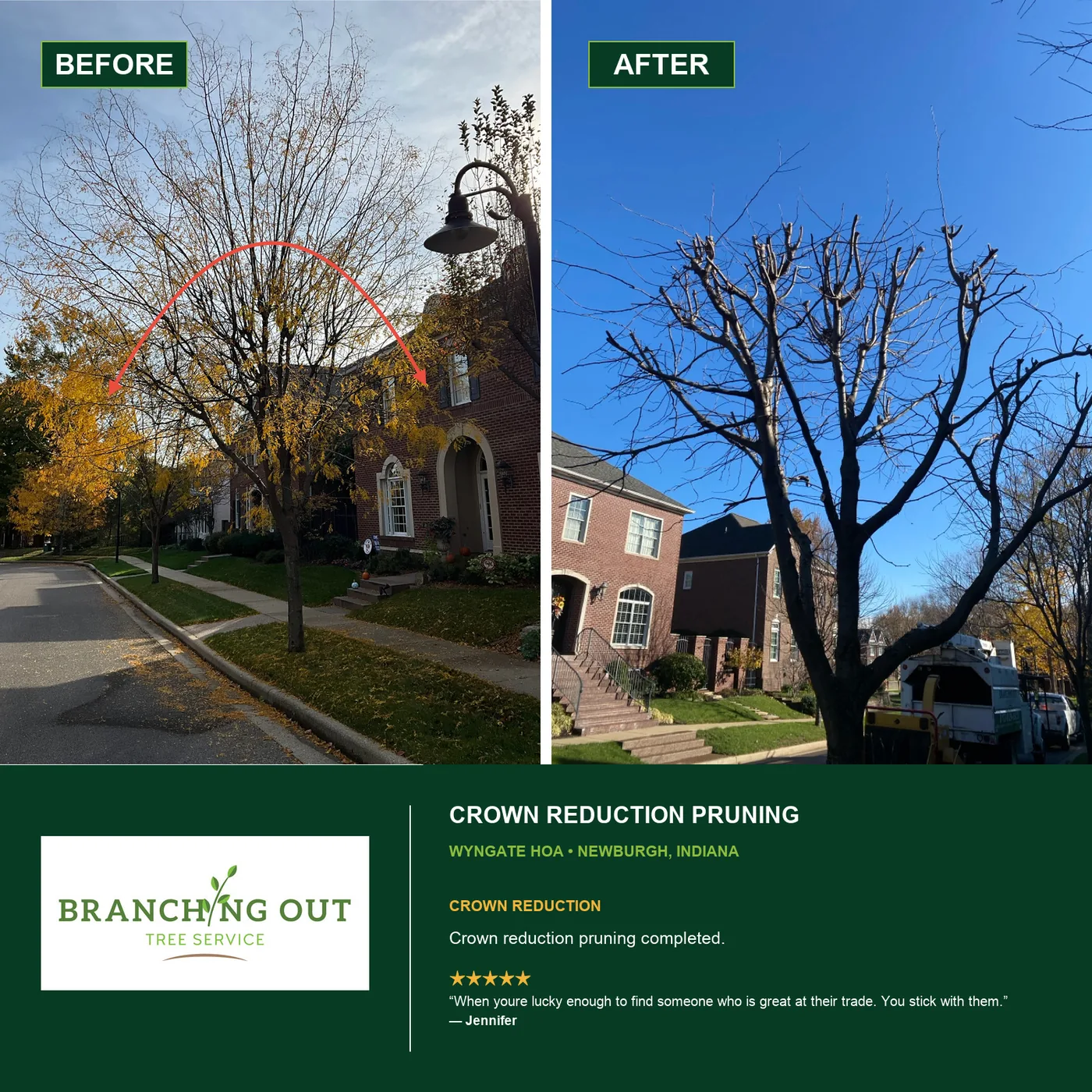
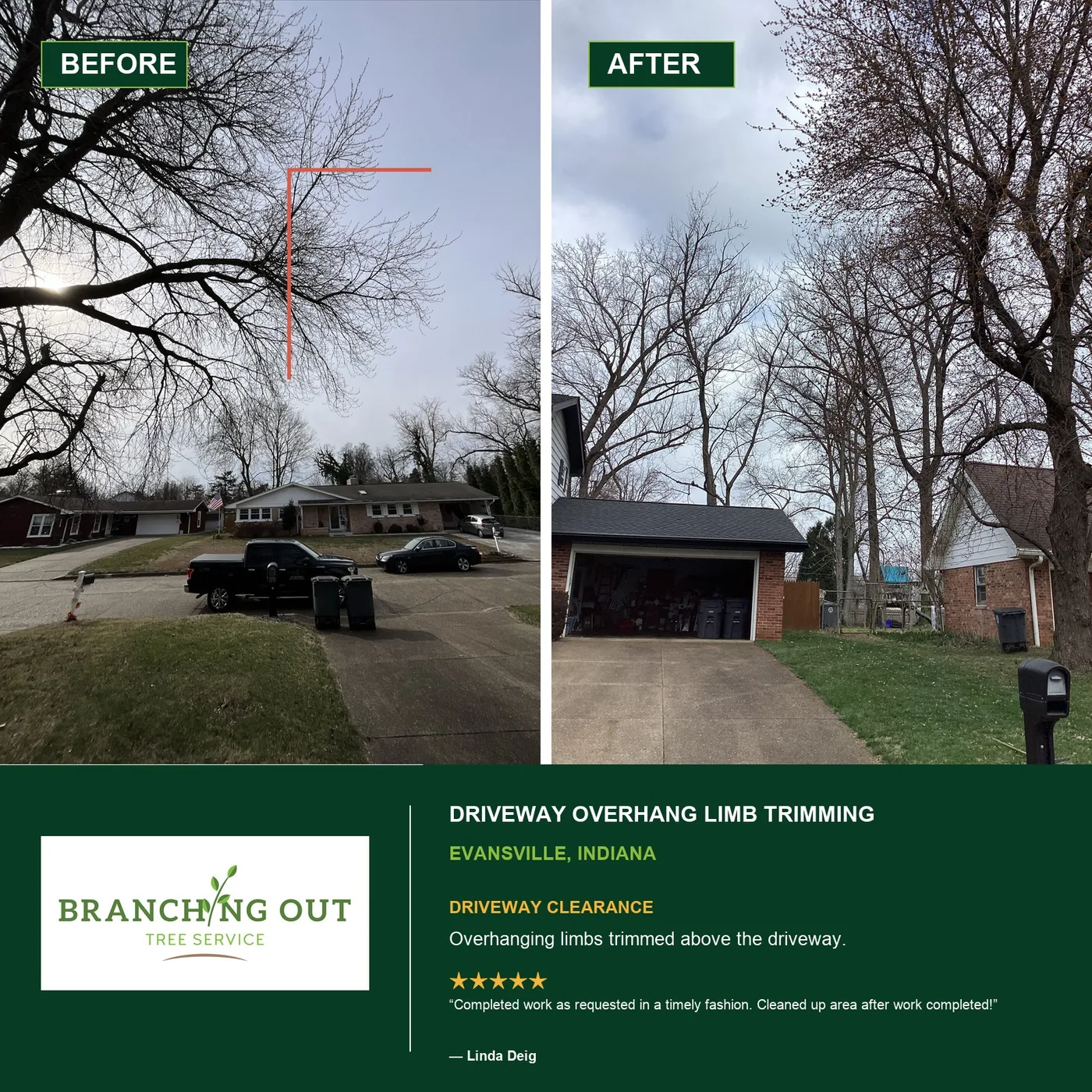
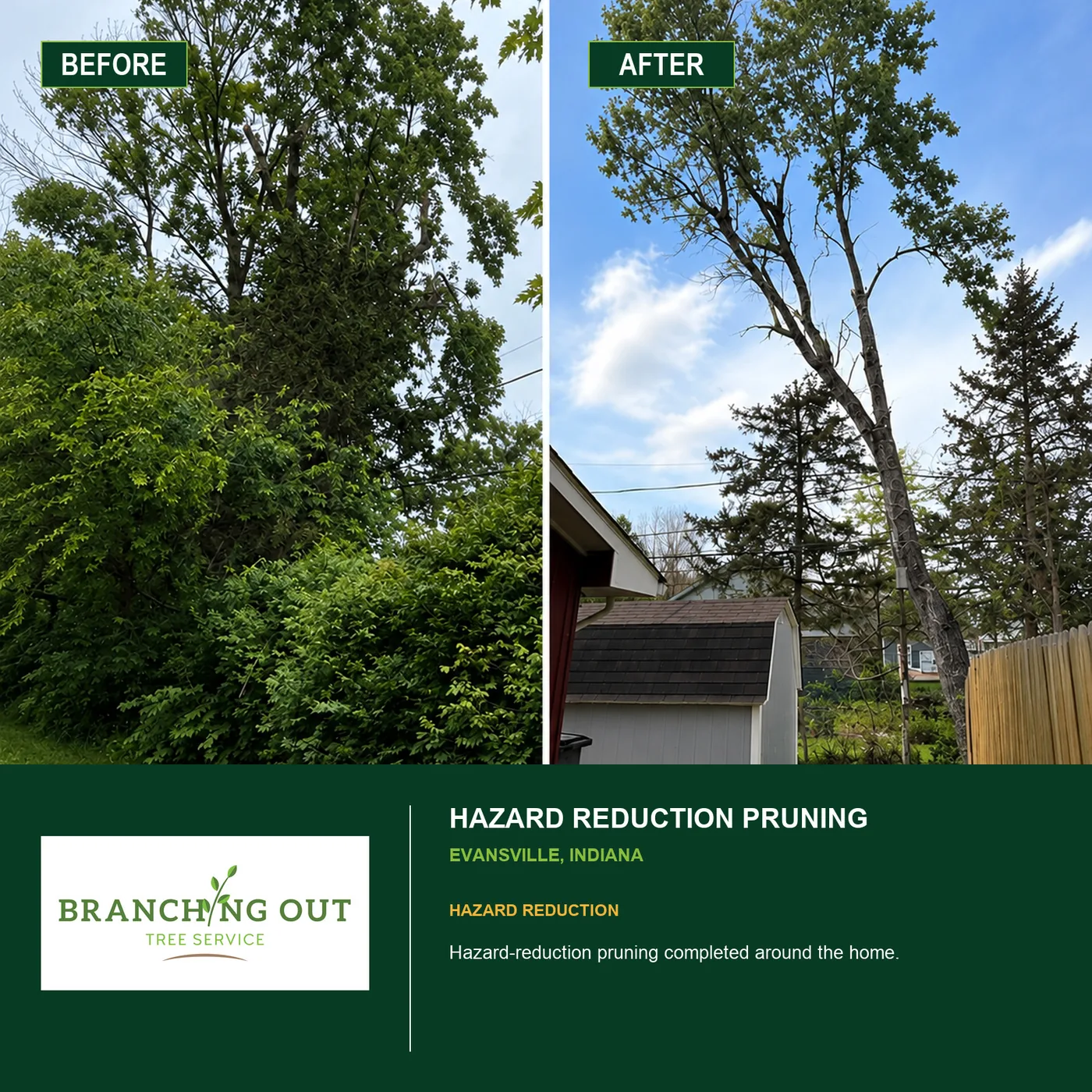
Good pruning is not simply cutting branches. It is a planned decision about structure, clearance, tree health, seasonal timing, and the property below it.
What professional tree trimming includes
The scope may include deadwood removal, roof or driveway clearance, structural pruning, crown reduction, crossing-branch correction, or hazard reduction. We identify the goal first so every cut has a practical reason.
Pruning, hazard reduction, or removal?
Pruning keeps a tree while addressing specific branches or clearance needs. Hazard reduction focuses on a documented risk, while removal is reserved for trees that cannot reasonably meet the property’s safety or use goals. We explain the most practical option before preparing the quote.
Avoiding topping and damaging cuts
Topping and excessive pruning can create weak regrowth, decay, sun exposure, and additional maintenance. We use purposeful cuts that improve clearance or reduce risk while respecting the tree’s natural form.
Winter tree pruning: when dormant pruning makes sense
Winter is a useful time to plan tree care in Evansville, Newburgh and Henderson. With leaves off deciduous trees, the branch structure is easier to see. That can help identify crossing limbs, clearance concerns and branches that need a closer look.
Dormant pruning means pruning while a tree is not actively growing. Late winter or early spring, before new growth begins, can be a suitable window for many trees. The right timing still depends on the species, condition, weather and purpose of the work. A bare canopy does not mean every branch should be cut.
Start with the tree and the goal
Tell us what you want to change: branches over the roof, better driveway clearance, deadwood removal or a concern about the tree's structure. Branching Out reviews the tree and the property before recommending the work. Some concerns call for pruning; others need a tree-health assessment or a discussion about removal.
A seasonal pruning plan should account for:
- The species. Oaks need particular care around pruning timing because fresh wounds can be an infection route for oak wilt. Dormant-season work can reduce the risk of insect spread; it does not guarantee prevention.
- Flowers and new growth. Some spring-flowering trees carry next season's buds through winter. Pruning at the wrong time can remove those buds. Timing for appearance may differ from timing for a health or safety concern.
- Current condition. A stressed, declining or previously damaged tree may need a different approach from a healthy tree. The amount of living canopy removed matters as much as the season.
- Weather and access. Ice, frozen wood and unsafe working conditions can affect whether work should proceed. A calendar date alone does not establish a suitable work window.
Plan routine work; report hazards promptly
A hanging branch, split limb or recent storm damage should be assessed promptly rather than left until a preferred pruning month. Keep people, pets and vehicles away from the affected area. Do not climb, pull on damaged limbs or approach utility lines. Contact the utility for line hazards and emergency services if there is immediate danger.
For routine work, request a quote with the property address and a brief description of the concern. Photos taken from a safe place on the ground can help explain the job, but they do not replace a site assessment.
See how the pruning goal changes the work
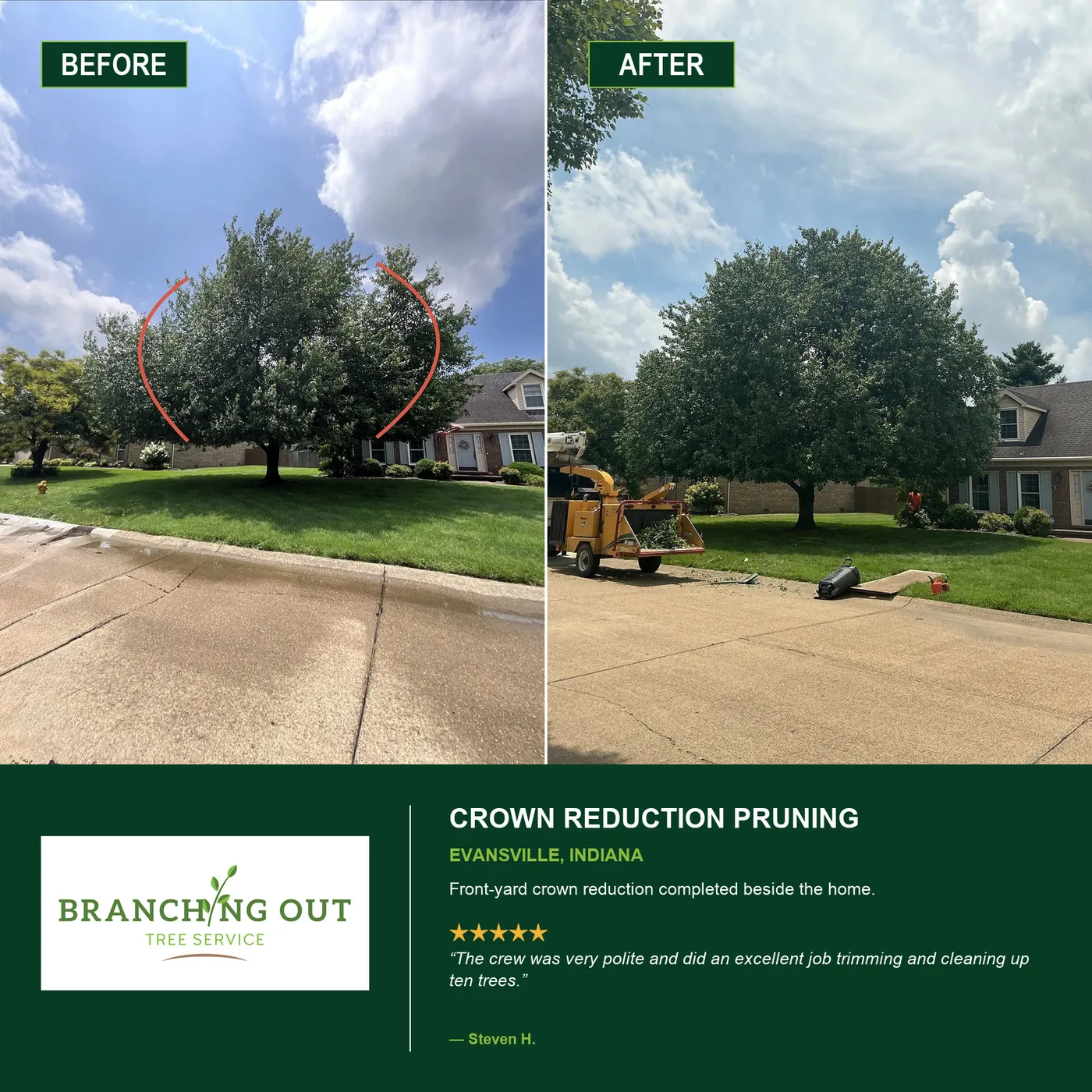
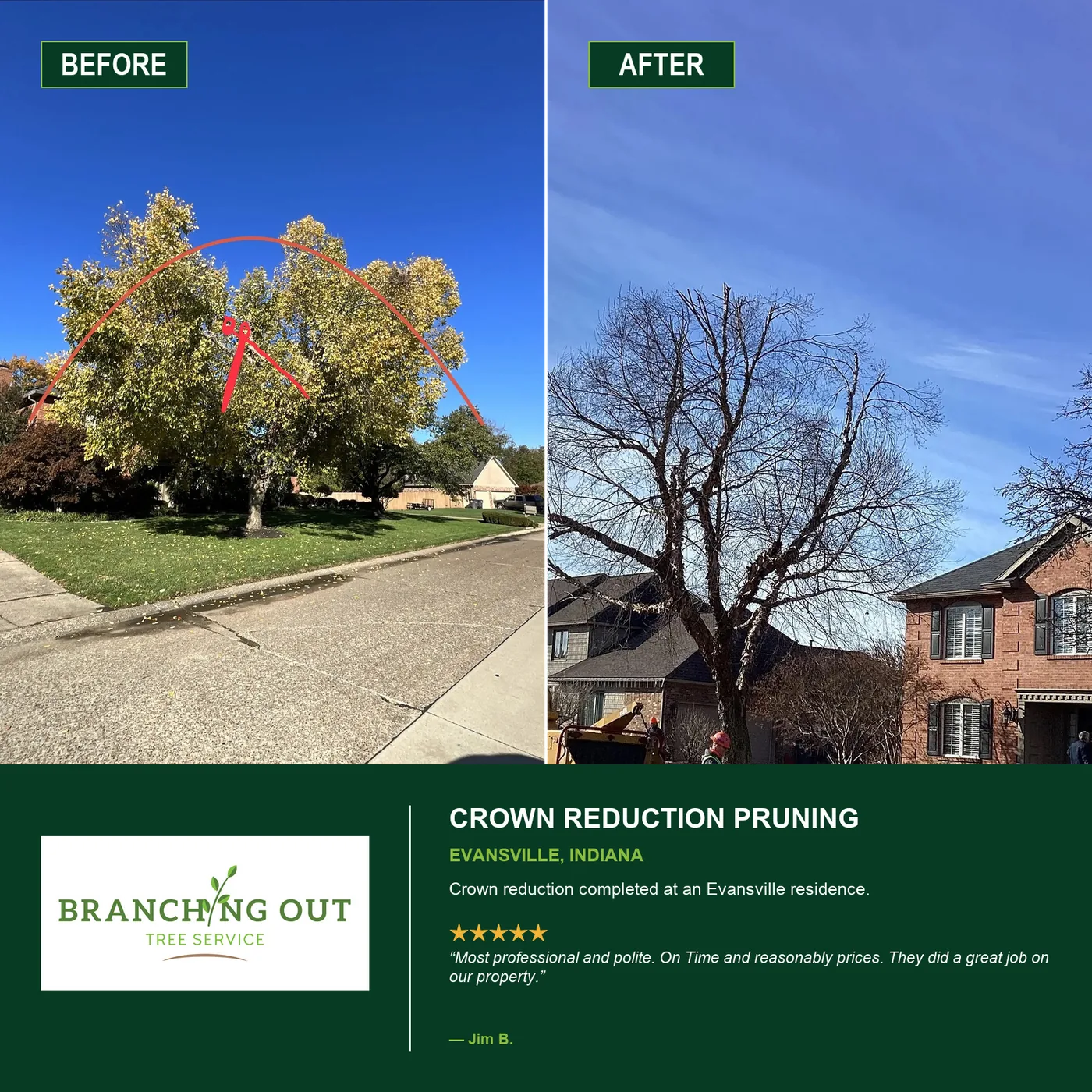
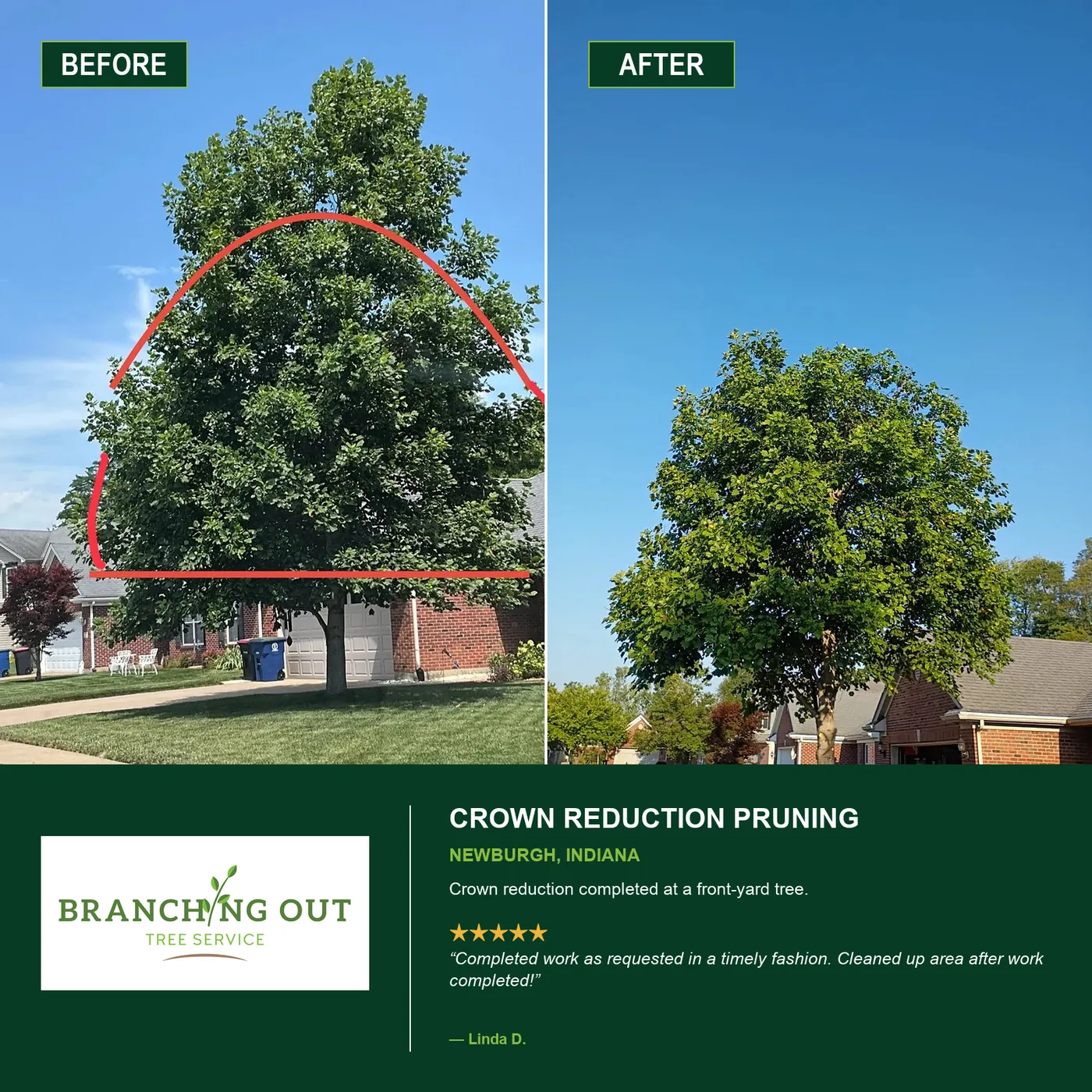
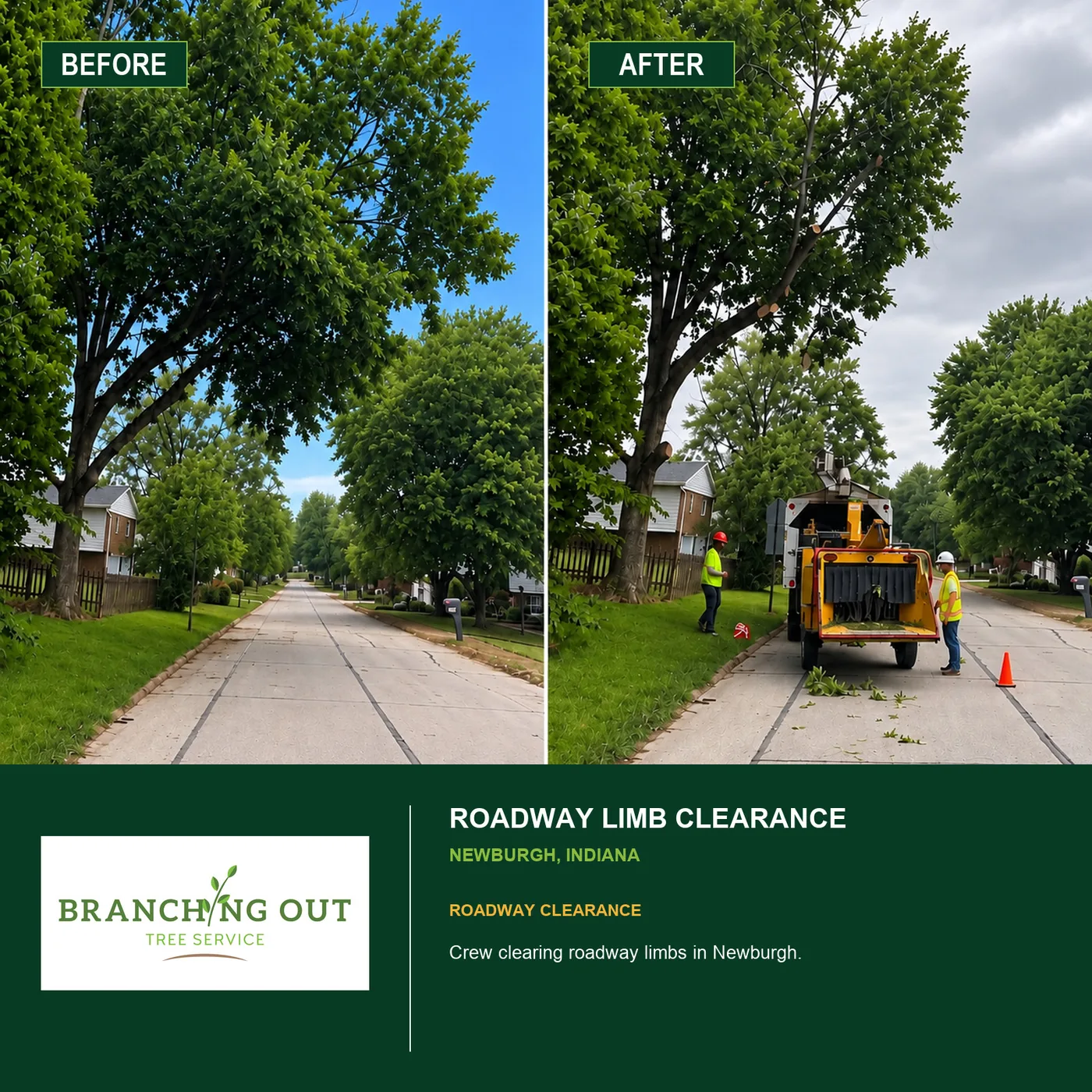
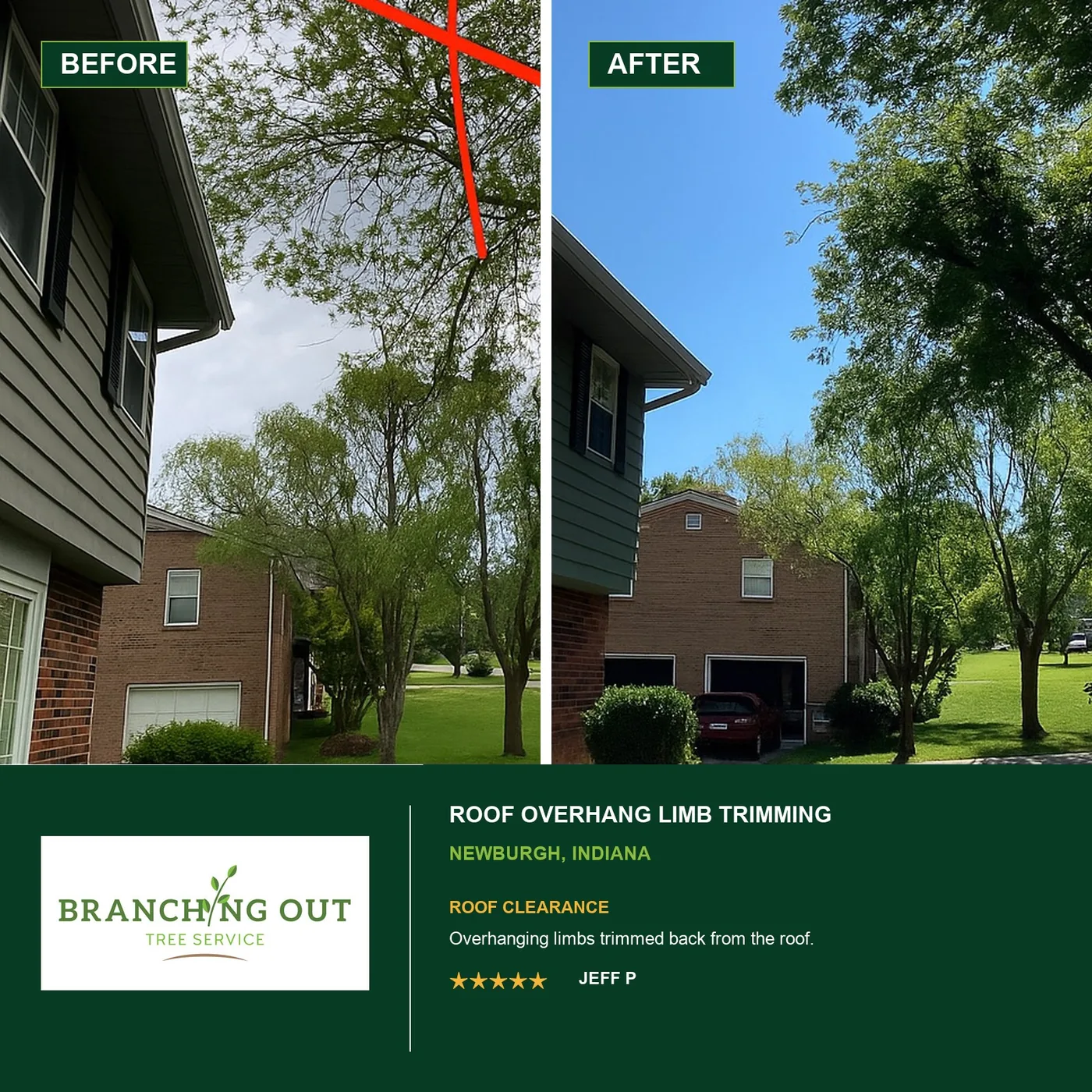
Our local examples include maple crown reduction in Evansville and overhanging-limb clearance in Newburgh. Explore these projects to see different pruning goals, then ask about the right scope for your tree.
Questions about winter pruning
Is winter the best time to trim every tree?
No. Dormant-season pruning suits many trees, but species, flowering habits, tree condition and the reason for pruning all matter. Branching Out can review the tree and explain whether winter work, a later pruning window or another type of care makes sense.
What is the difference between tree trimming and pruning?
People often use the terms interchangeably. Pruning describes selective cuts made for a specific purpose, such as removing dead branches, improving clearance or addressing structure. When you request a quote, describe the result you want so the proposed work is clear.
Can an oak be pruned in winter?
Winter is generally a better time to plan routine oak pruning because insect transmission of oak wilt is less likely during the dormant season. Local conditions and the tree's condition still matter. Have damaged oaks assessed rather than trying to choose a date or treatment from an online guide.
Should I wait for winter if a limb is broken?
Do not delay reporting a broken, hanging or storm-damaged limb just to match a seasonal pruning schedule. Keep clear and call for an assessment. If a utility line is involved, contact the utility. Call emergency services for immediate danger.
Will pruning make my tree storm-proof?
No tree service can make a tree storm-proof. Appropriate pruning can address specific defects, deadwood or clearance concerns, but the remaining tree and surrounding conditions still carry risk. The recommendation should explain the concern being addressed and any limits of the proposed work.
What affects the cost of tree pruning?
Tree size and condition, the branches involved, access, nearby structures or utilities, equipment needs and debris handling affect the quote. Branching Out quotes the actual property and requested work rather than using one price for every tree.
Pruning quote preparation
Tell us what needs to change around your tree
Describe your concern and the clearance or tree-care result you want. You do not need to identify the species or take measurements. Ground-level photos help us prepare for a site review; they do not replace it.
Identify the tree and goal
Share the property address and whether you are concerned about deadwood, roof or driveway clearance, crossing branches or storm-damaged limbs.
Show the tree safely
If safe, take ground-level photos of the whole tree, the branches of concern and nearby structures. Do not climb or stand beneath damaged limbs.
Explain access and cleanup
Describe gates, fences, driveways and the equipment route. Tell us what you want considered for branch and debris cleanup.
The website quote form does not accept attachments. Email photos to jason@intreeservice.com with your name and service address so we can match them to your request. You can also send photos after we contact you.
Do not climb, enter a hazard area, or approach utility lines to take a photo. Photos support the initial review; they do not replace an on-site assessment.
Need a clear next step?
Call 812-629-8920 or request a quote for the actual property and work needed.
Request a Quote