
Hello friends,
Winter has a way of turning a tree problem into a house, driveway, or fence problem. If you already know a tree or limb needs attention, now is the time to make a plan. Here’s what I’d look at before the weather turns.
Handle known problems before the next ice storm
Pruning and trimming. Don’t wait until ice is hanging on the branches to deal with dead or broken limbs, limbs touching the roof, or clearance problems over a driveway. Ice adds weight. Addressing known defects and clearance concerns ahead of time can reduce avoidable trouble and give us time to plan the work.
Pruning should solve a specific problem with the right cuts. Species, disease risk, and current stress determine timing; we may recommend waiting for dormancy, especially for oaks. Removing healthy growth indiscriminately does not make a tree stormproof.
Tree removal. If a tree is dead, badly damaged, or showing a new lean near something you want to protect, have it assessed now. We’ll explain the options and quote appropriate work. When removal is warranted, tackle it before winter exposes the problem. Stump grinding is a separate item to discuss.
Precipitation and fall watering
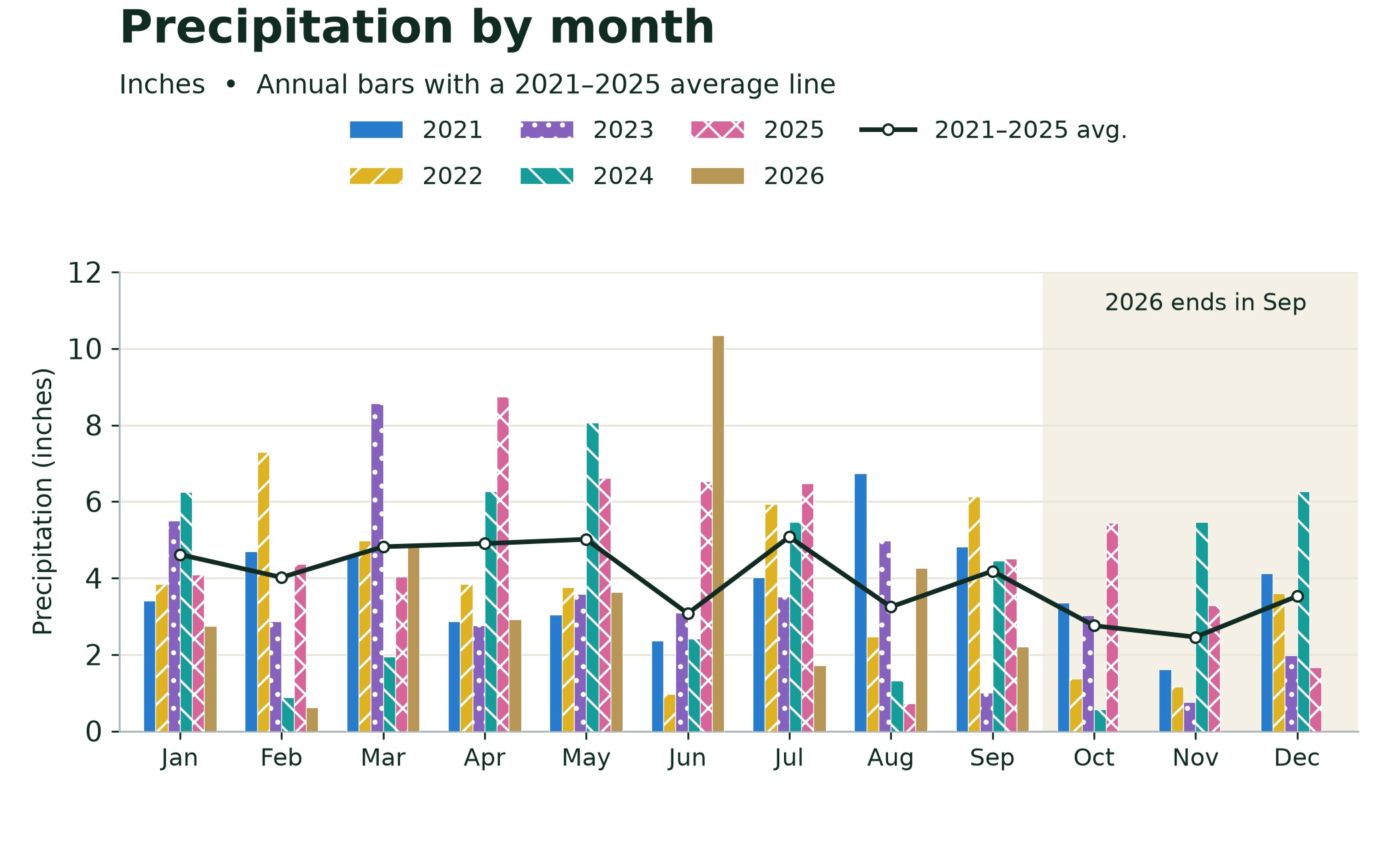
Through September, Evansville’s airport recorded 33.27 inches of precipitation, versus a 2021–2025 average of 38.93 inches for the same months—about 15% less. June was very wet, yet August 27–September 8 brought 13 straight days with less than 0.01 inch each day. Monthly totals can hide a dry stretch.
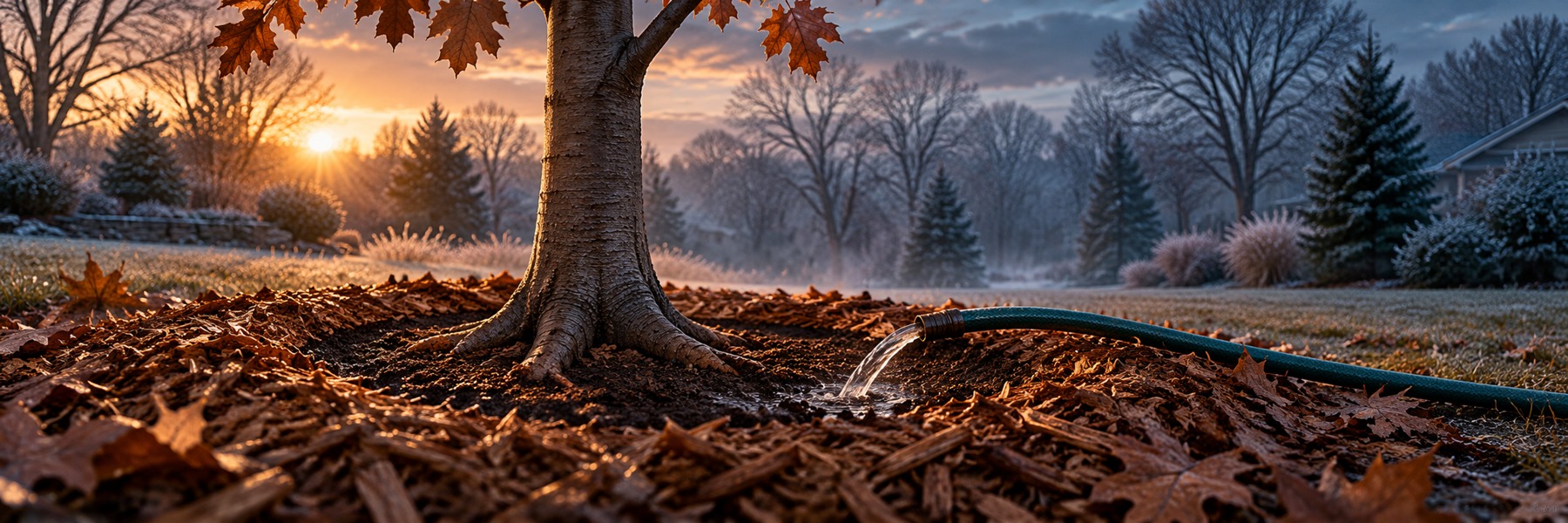
Check moisture in the root ball and nearby soil beneath the mulch. Water slowly when needed, adjusting to tree size, drainage, weather, and establishment stage. Avoid keeping roots saturated, and wait if the soil is frozen. A five-gallon bucket is a delivery tool, not a universal weekly prescription.
Root Revitalizer Pro™ and the RootFlow watering kit are options we can discuss for an appropriate care plan. They cannot correct deep planting, girdling roots, poor drainage, or inadequate watering. Fertilizer is not a routine requirement at planting; follow current product directions.
Explore RRP online and watch the RRP / RootFlow film on YouTube. The animated overview introduces the products; use the application guide for directions. Ask us whether the system fits your tree and site.
Watch the RRP / RootFlow YouTube overview
What this year’s heat means for your trees
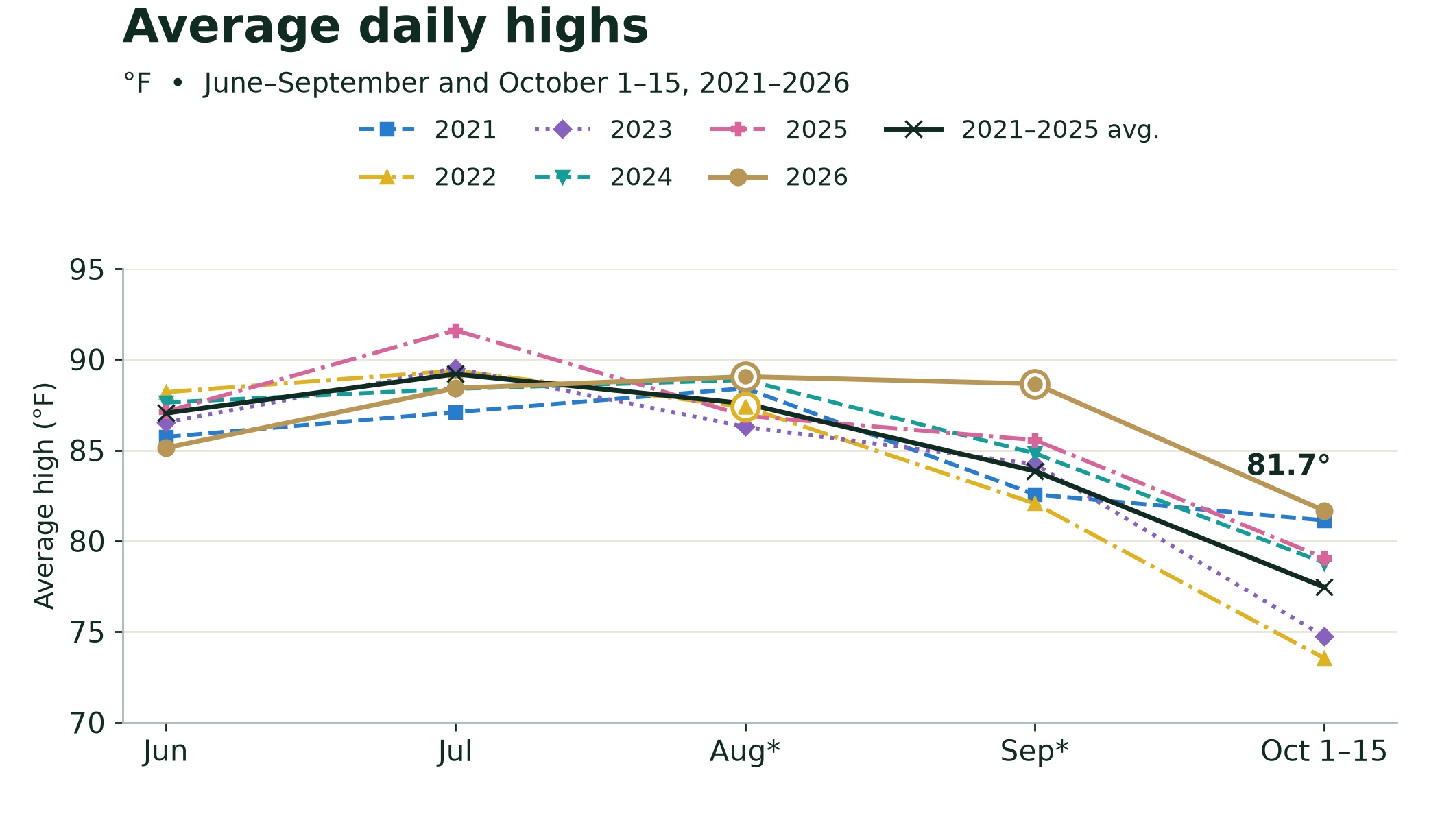
June and July average daily highs were a little below the 2021–2025 average. The supplemented comparison puts August about 1.5°F warmer and September about 4.8°F warmer. October 1–15 averaged 81.7°F—about 4.2°F warmer than those same dates in the previous five years. Circled chart points use nearby airports to fill missing temperatures, so those comparisons are approximate.
Warm weather can increase water demand, especially for recently planted trees. Scorched leaves or a thinning canopy can have several causes, so don’t assume heat explains a tree’s decline. Check moisture, note changes, and let us evaluate persistent concerns.
Fall planting and Fitzscapes
Cooler air reduces water demand while still-warm soil can support root growth. Fall works well for many container-grown and balled-and-burlapped trees when species, moisture, and timing fit the site. Some trees and planting stock are better saved for spring. Plan for mature size and arrange utility locating before digging.
I refer clients to Chris Fitzgerald at Fitzscapes for new tree plantings. I’ve found him trustworthy and reliable, with a good understanding of planting depth, spacing, and location. He offers affordable fall planting options; talk with him about the scope and cost for your yard. Reach Chris at 812-449-3440 or fitzscapes.com.
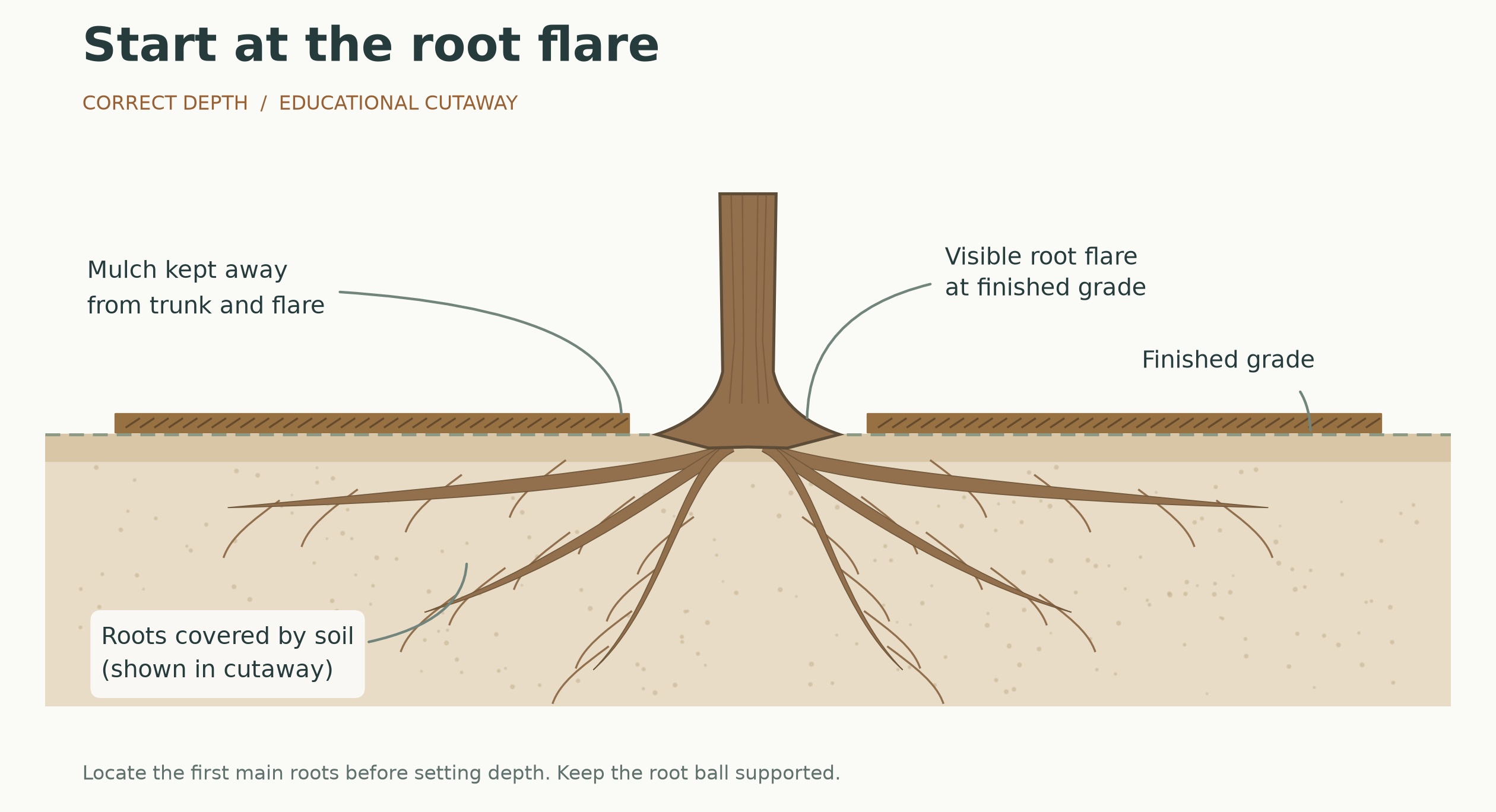
Find the actual root flare, where the trunk widens into the main roots. Nursery soil can hide it. Keep the flare visible at or slightly above finished grade, with roots properly covered. Compacted or poorly drained soil may call for another location or a broad raised planting area designed for the site.
With the root ball positioned and supported, remove trunk twine and synthetic wrapping. Handle natural burlap and wire baskets using a supported removal method that clears the upper ball while protecting its integrity. Keep a shallow mulch layer away from the trunk and flare. Continue checking moisture during establishment.
Jason Bellew Branching Out Tree Service 812-629-8920 Evansville • Newburgh • Henderson
← Back to all Arborist Insights