
August is when weeks of heat, limited rainfall, turf competition, insects, and storm stress often begin to show in a tree's canopy. Some symptoms improve with better root-zone care. Others point to structural defects, pests, disease, or declining roots. Here are four things worth checking now.
Is your tree thirsty—or is something else wrong?
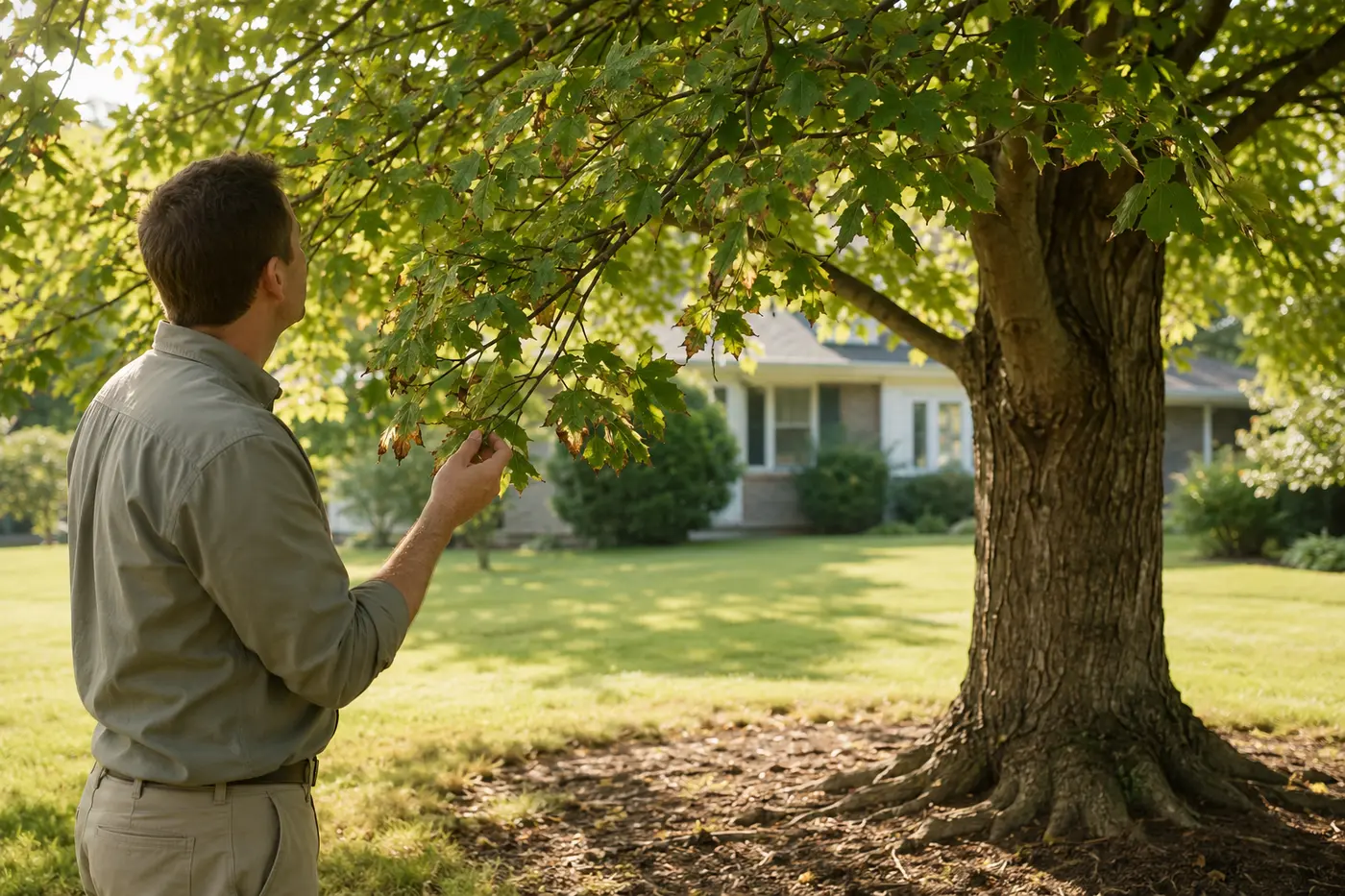
Wilting, curled leaves, scorched edges, early fall color, premature leaf drop, and tip dieback can all appear during hot, dry weather. But watering is not always the full answer. Compacted soil, damaged roots, poor drainage, insects, disease, and planting-depth problems can produce similar symptoms.
Before adding more water, check:
- Is the soil dry several inches below the surface—or still wet?
- Is decline spread across the canopy, limited to one limb, or concentrated at the top?
- Are there bark cracks, holes, sawdust, mushrooms, root damage, or recent construction nearby?
The right way to water trees during August heat
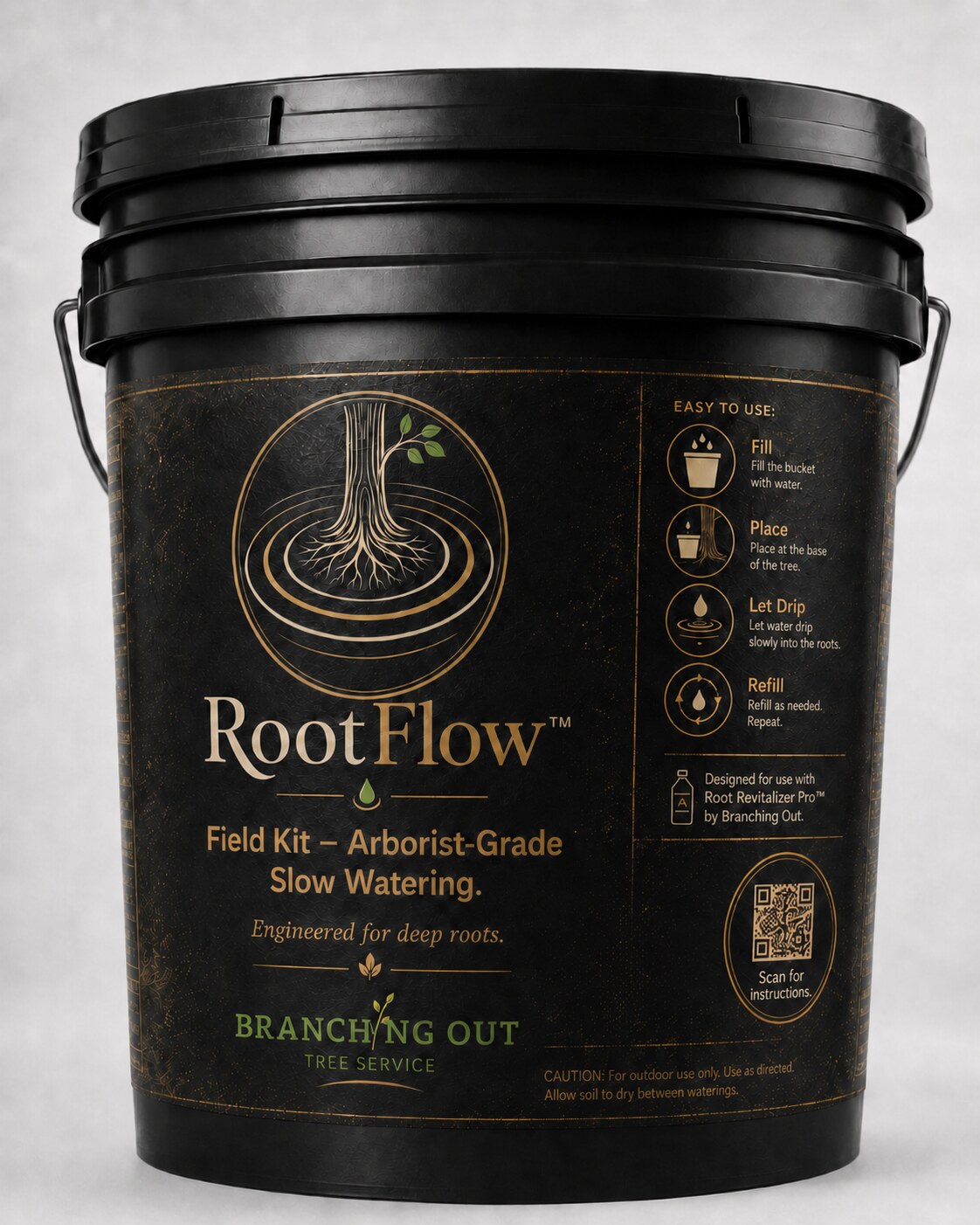
A quick spray from a hose may wet only the surface. Trees benefit more from slow watering that soaks into the active root zone, with the amount and frequency adjusted for tree size, soil, slope, rainfall, and drainage.
- Water slowly enough to limit runoff.
- Focus on the root zone near and within the drip line—not directly against the trunk.
- Check soil moisture before watering again; overwatering can also damage roots.
- Use a 2–3-inch organic mulch layer to reduce turf competition and moisture loss; keep mulch off the trunk.
Five warning signs you shouldn't ignore
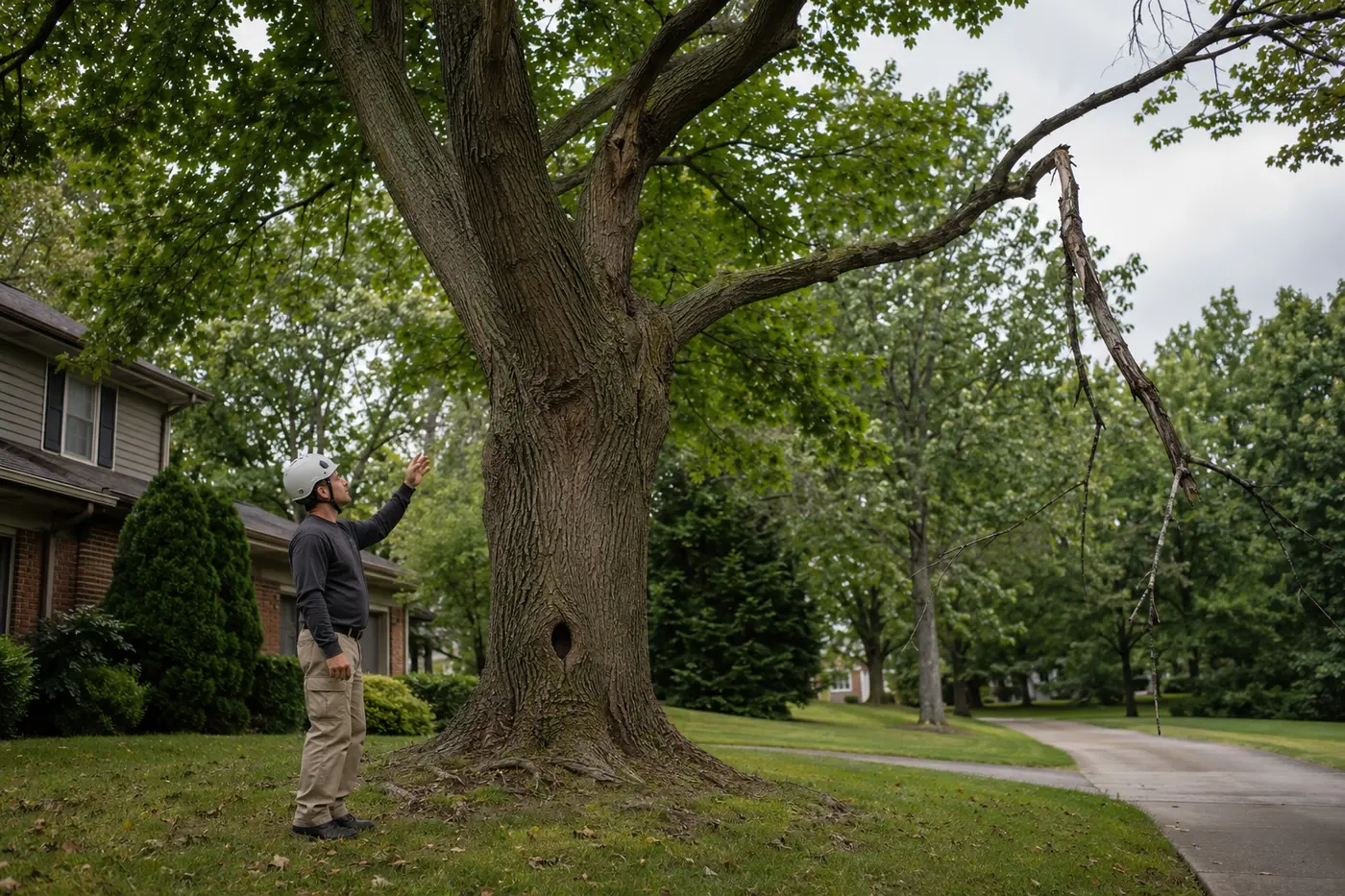
No single visual sign proves a tree will fail. Risk rises when a defect is recent, worsening, or positioned over a home, driveway, play area, road, or other frequent-use space.
- Large dead, broken, or hanging branches
- Fresh cracks or splits in the trunk or at major branch unions
- Cavities, decayed wood, or mushrooms near the trunk base
- New soil cracking, lifting, or movement around the root plate
- A sudden lean or a noticeable shift in the canopy
Emerald ash borer: late-summer signs homeowners miss
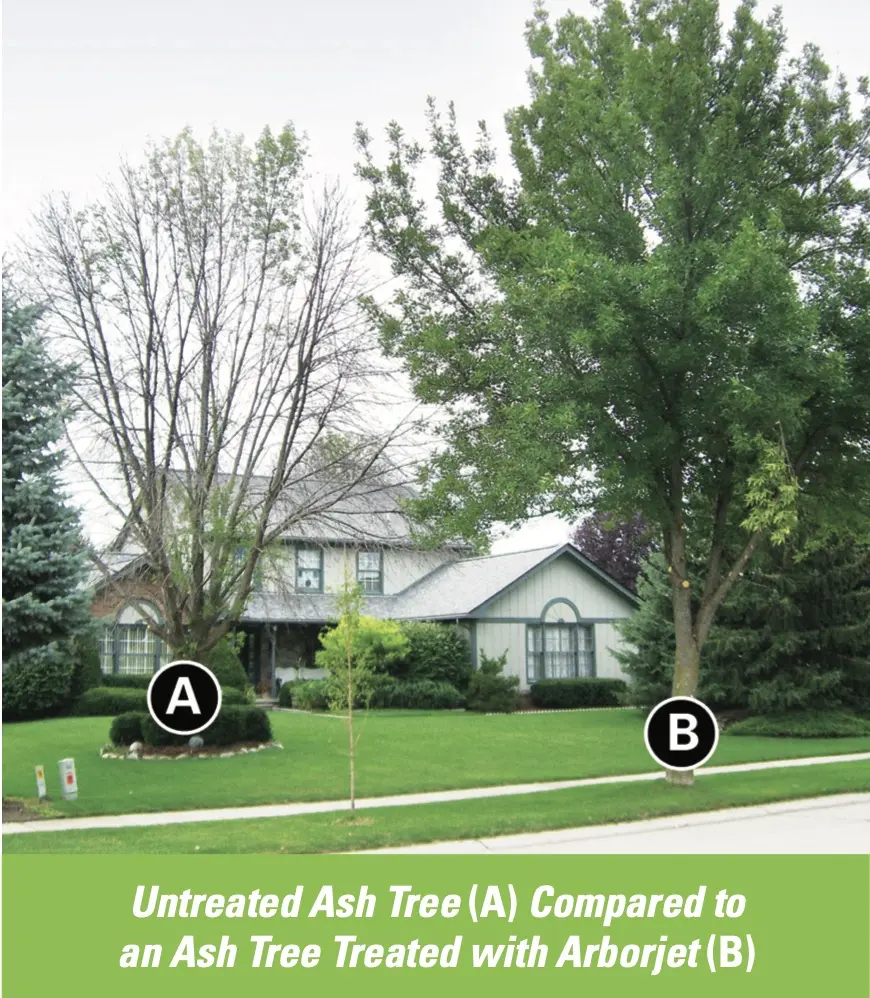
Emerald ash borer larvae feed beneath the bark, damaging the tissues that move water and nutrients through an ash tree. By late summer, canopy symptoms can be easier to notice—but visible decline may mean the infestation has already been active for some time.
Look for:
- Thinning or dieback beginning in the upper canopy
- New sprouts growing from the trunk or major limbs
- Vertical bark splits or S-shaped galleries beneath loose bark
- Heavy woodpecker activity or pale bark “flecking”
- Small D-shaped exit holes in the bark
Treatment decisions depend on confirming the tree is an ash, evaluating canopy condition, and deciding whether the tree is still a good candidate to preserve. Trees with advanced decline or structural concerns may be safer to remove.